
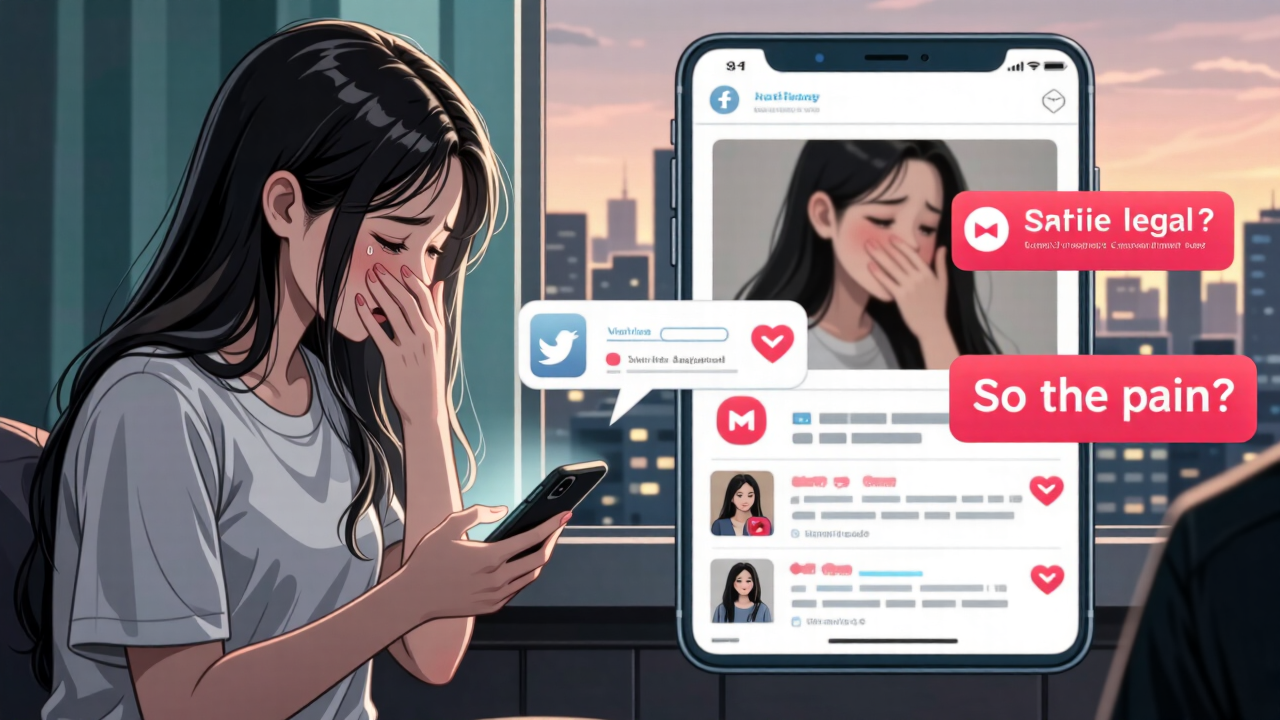
The Weaponization of Romantic Failure
Looking out at the unrelenting, miserable gray drizzle over Shengang Township right now, my screen casting an obnoxious blue glare over a cup of oolong tea that went entirely cold three hours ago, I realize that the internet has successfully tricked a terrified generation into believing that broadcasting their worst romantic failures to fifty million strangers is a form of personal empowerment. It is suicide. We arrogantly pretend that naming and shaming a toxic ex in a fifty-part TikTok playlist is a brave act of reclaiming our narrative, completely ignoring the brutal reality that monetizing your fresh trauma just turns your heartbreak into an unpaid, highly liable content mill for a foreign tech conglomerate. They steal your pain.
Right now, on the ground, the only thing that moves the needle for couples surviving a messy split in 2026 is the horrifying realization that the court system has absolutely stopped treating viral vent sessions as harmless digital diaries and is now aggressively prosecuting them as targeted cyber-harassment and commercial libel. The judges are furious. (Maybe I’m overthinking this, but it truly infuriates me how modern pop-psychology therapists on social media constantly cheerlead this digital vigilantism, treating a potential defamation lawsuit that could bankrupt a twenty-something like it’s just a sassy form of setting boundaries.) They are legally illiterate. If you want to understand the profound ethical rot at the center of the modern breakup, you have to look past the slick marketing of the creator economy and realize that publicly executing your ex’s reputation is an irreversible corporate broadcast, not a healing exercise. Silence is required.
The Economics of Serialized Trauma
When you actually look at the undeniable financial wreckage left behind by these hyper-optimized viral ex-posés, it becomes painfully obvious that the modern emotional pipeline is currently collapsing under the weight of spectacular systemic greed and desperate attention-seeking. It is a business. On Friday, March 13, 2026, the S&P 500 closed down at a brutal 6,632.19 amidst a terrifying wave of global inflation panic, reflecting an exhausted consumer base that has suddenly realized they can pay their soaring rent simply by turning their cheating boyfriend into a weekly episodic villain for the internet to consume. Grief pays incredibly well.
Stop being broke and stuck paying for expensive traditional therapy when you can simply use or tap into a massive, bloodthirsty audience that will literally fund your digital wallet if you just leak enough intimate text messages and audio recordings of your former partner begging for forgiveness. Trauma is literal currency. The sheer architectural genius of the short-form video algorithm lies in its ability to seamlessly integrate the psychological need for external validation with the absolute refusal to process actual grief privately, providing a brilliant emotional safety net that appeases our ego while completely starving our ability to move on. We are trapped.
Monetizing the Mob
We desperately treat the virtual dating pool as a disposable playground for our ego, completely ignoring the tangible, beautiful chaos that used to occur when a relationship simply ended quietly and both parties were allowed to fade into obscurity without a permanent digital record of their worst mistakes. Anonymity is dead. (Honestly, I laugh at these naive influencers who raise millions of views claiming they are just “speaking their truth,” when they clearly have never experienced the deeply irrational, gravity-defying terror of realizing their entire monthly income is now entirely dependent on finding new and exciting ways to complain about a guy they dated for six weeks.) They are slaves.
The Defamation Trap: When Venting Becomes Libel
The monolithic tech companies and panicked legal scholars are currently desperately scrambling to establish precedents for this chaotic behavior, completely missing the blindingly obvious fact that their angry users are fleeing traditional justice precisely because the legal system feels entirely too slow for their immediate need for revenge. Patience is dead. You cannot outsource your vengeance to a viral mob without actively surrendering your own legal safety, allowing a bizarre societal rulebook to systematically eliminate the beautiful, necessary silence that historically protected individuals from catastrophic civil liability during a messy separation. Silence is a massive shield.
If you examine the massive wave of civil litigation sweeping through the courts in late 2025 and early 2026, you will find a highly engineered, terrifying new legal reality where the targets of these viral “Storytimes” are successfully suing their exes for hundreds of thousands of dollars in lost wages, intentional infliction of emotional distress, and reputational damage. The courts agree. It infuriates me that relationship analysts are only now acting surprised that financially independent adults absolutely refuse to date someone with a massive TikTok following, opting instead to hoard their privacy like a crutch because they are terrified of ending up as the antagonist in a viral miniseries. Paranoia wins out.
The Scarlet Letter of the Algorithm
A carefully curated apology video does absolutely nothing to stop a mobilized army of parasocial fans from doxxing your family, calling your employer, and destroying your credit rating just because you sent a careless text message to a twenty-two-year-old with a ring light. The mob is ruthless. We eagerly trade the acute, necessary pain of a real-life logistical confrontation for a low-grade, perpetual paranoia that slowly rots our society while enriching the exact same social media corporations that destroyed our communication skills in the first place. The screen isolates.
The Psychological Rot of the Infinite Feedback Loop
Watching modern singles try to build a lasting romantic future upon the sterile foundation of a viral ex-posé is like watching someone try to grow a towering oak tree in a sealed, climate-controlled laboratory—the environment is completely devoid of the natural friction, geographic stability, and unpredictable silence required to create deep, resilient emotional roots. The setup is doomed. You cannot mathematically optimize human vulnerability, and no amount of algorithmic tweaking or millions of supportive comments from complete strangers is going to convince a broken, exhausted heart that public revenge is an adequate substitute for private healing. Revenge is hollow.
Decades of harsh psychological reality confirm that recovering from romantic betrayal operates entirely like a chaotic, unpredictable earthquake, heavily reliant on a sense of unscripted internal reflection that has been systematically eradicated by the absolutely crushing, robotic pressure to keep your audience updated on the drama. You perform your grief. (Maybe I’m overthinking this, but… seeing someone actually cry on camera, check their lighting, and then aggressively edit the footage for maximum audience retention before posting it feels like a radical act of self-mutilation.) They butcher their own souls.
Becoming the Victim by Profession
This creates a deeply unsettling self-fulfilling prophecy where the cultural infrastructure actively rewards your inability to let go, offering a frictionless, hyper-convenient alternative to the terrifying, magnificent responsibility of forgiving someone and moving on with your actual physical life. Friction is essential. They sell the illusion that your perfectly curated trauma narrative, your mathematically guaranteed viral reach, and your heavily filtered righteous anger can successfully replace the warmth of human intimacy, completely ignoring decades of rigorous psychological research proving that anchoring your public identity to a past victimization permanently halts your cognitive development. Science proves this.
When an entire demographic suddenly stops relying on the quiet counsel of a friend and instead shifts their energy toward aggressively managing a complex portfolio of public allegations against their former lovers, it ceases to be a coping mechanism and instantly becomes a highly lucrative, infinitely exploitable new psychological prison. Greed blinded them.
The Death of Private Heartbreak
As we survive the crushing economic realities of 2026, we have to aggressively accept that human love is simply not enough to bridge the massive, terrifying gap between a digital pipeline that demands constant, fiery conflict and a physical reality that demands absolute, messy emotional grace. Grace is entirely forgotten. The harsh truth that nobody in the lucrative creator economy wants to admit is that sometimes a relationship doesn’t fail because of a malicious, calculating villain; it fails because a weary soul and an exhausted heart are trying to run two completely different, fundamentally incompatible social protocols on the exact same broken human hardware. Crash is inevitable.
We wander through these pristine, perfectly rendered digital comment sections hoping for a sudden miracle of genuine justice, desperately seeking validation from millions of anonymous avatars who will instantly forget our names the second they scroll past our tears. We are completely disposable. Perhaps the only real mercy left in this hyper-connected nightmare is recognizing when the structural chasm between a viral broadcast and an actual, beating heart is simply too wide to jump. I am done.