The Romanticization of the Global Citizen
Looking out at the unrelenting, miserable gray drizzle of the Frankfurt skyline right now, my screen casting an obnoxious blue glare over a cup of espresso that went entirely cold three hours ago, I realize that the Western world fundamentally misinterprets the reality of the international marriage. It is arrogance. We aggressively pretend that falling in love across borders is a beautiful, cinematic triumph over geopolitics, completely ignoring the brutal reality that committing to someone from an entirely different cultural baseline is a grueling, daily logistical nightmare. They sell a fantasy. Right now, on the ground, the only thing that moves the needle for couples trying to survive a cross-cultural union is not the grand, sweeping gestures of tolerance, but the terrifying ability to withstand the suffocating friction of mismatched daily habits. Love fades quickly here.
When the S&P 500 closed down at a brutal 6,632.19 on Friday, March 13, 2026, amidst a terrifying wave of global inflation panic, the immediate economic reality forced thousands of international couples to abandon their expensive distractions and face the terrifying silence of their own living rooms. Wallets are empty. Stop being broke and stuck paying ridiculous premiums for couple’s therapy when you can simply look at the raw data, which clearly shows that intercultural couples face a 10% higher divorce rate than culturally matched peers. Friction destroys them. (Maybe I’m overthinking this, but it truly infuriates me how American lifestyle bloggers constantly romanticize their “expat marriages” as endless Tuscan sunsets, completely failing to recognize the profound, silent resentment that builds when you literally cannot explain a childhood trauma to your spouse in a way they actually feel.) It is sickening.
The architects of modern dating applications engineered a behavioral loop that intentionally pushes us toward exotic, foreign matches, intentionally exploiting our dopamine receptors by dangling the constant illusion that someone from a different continent will magically cure our domestic boredom. We are exhausted. This absolute refusal to acknowledge the heavy tax of cultural integration creates a terrifying paradox where users spend years fighting immigration bureaucracy to live together, only to end the night feeling more profoundly isolated in the same bed than they ever did living alone. The bedroom isolates. Honestly, any psychologist who tells you that love is a universal language that conquers all barriers is either completely lying to you or has never actually tried to negotiate a deeply contested holiday dinner menu with an angry foreign mother-in-law. They are clueless.
The Linguistic Tax: Translating the Soul
If you want to understand the profound psychological decay at the center of the failing international marriage, you have to look past the slick corporate marketing of language-learning apps and realize that speaking a second language at home is actively creating a catastrophic, highly effective emotional black hole. Exhaustion drives this. You simply cannot mathematically optimize human vulnerability when every single confession, joke, and grievance must be mentally drafted, translated, and painfully delivered through a heavy accent that strips away every ounce of original nuance. Words lose meaning. An international partner will aggressively try to express a deeply complex feeling of inadequacy, completely bypassing the agonizing, anxiety-inducing mental effort required to find the exact vocabulary, only to have their spouse respond with a blank stare because the cultural context of the metaphor was completely lost in translation. They are strangers.
We desperately treat the physical world as a disposable playground for our ego, completely ignoring the tangible, beautiful chaos that occurs when two people naturally share the exact same native slang and can communicate a thousand words with a single, highly specific pop-culture reference. Shared history matters. (Maybe I’m overthinking this, but… seeing someone actually spend three hours exhausting their brain just to successfully explain a dry, sarcastic observation about a neighbor feels like a radical act of self-imposed psychological torture.) Humor dies first. They simply use or tap into a messy plan that works surprisingly well for the first two years of the honeymoon phase, converting their inherent charm into a highly optimized social currency that perfectly masks their crippling inability to ever truly know each other’s deepest internal monologues. Charm is a temporary bridge.
The Power Dynamics of Fluency
This creates a deeply unsettling self-fulfilling prophecy where the cultural infrastructure actively rewards the native speaker, offering a frictionless, hyper-convenient alternative to the terrifying, magnificent responsibility of leveling the playing field during a heated argument. The native always wins. They sell the illusion that your perfectly curated bilingual dictionaries, your mathematically guaranteed language classes, and your heavily filtered patience can successfully replace the warmth of native fluency, completely ignoring decades of rigorous psychological research proving that linguistic imbalances create massive, toxic power dynamics in domestic disputes. Science proves this. We eagerly trade the acute, necessary pain of a real-life, fair confrontation for a low-grade, perpetual submission where the non-native speaker simply gives up arguing because finding the right verbs is too physically draining. The silence isolates.
The Culinary Battleground: When Diets Collide
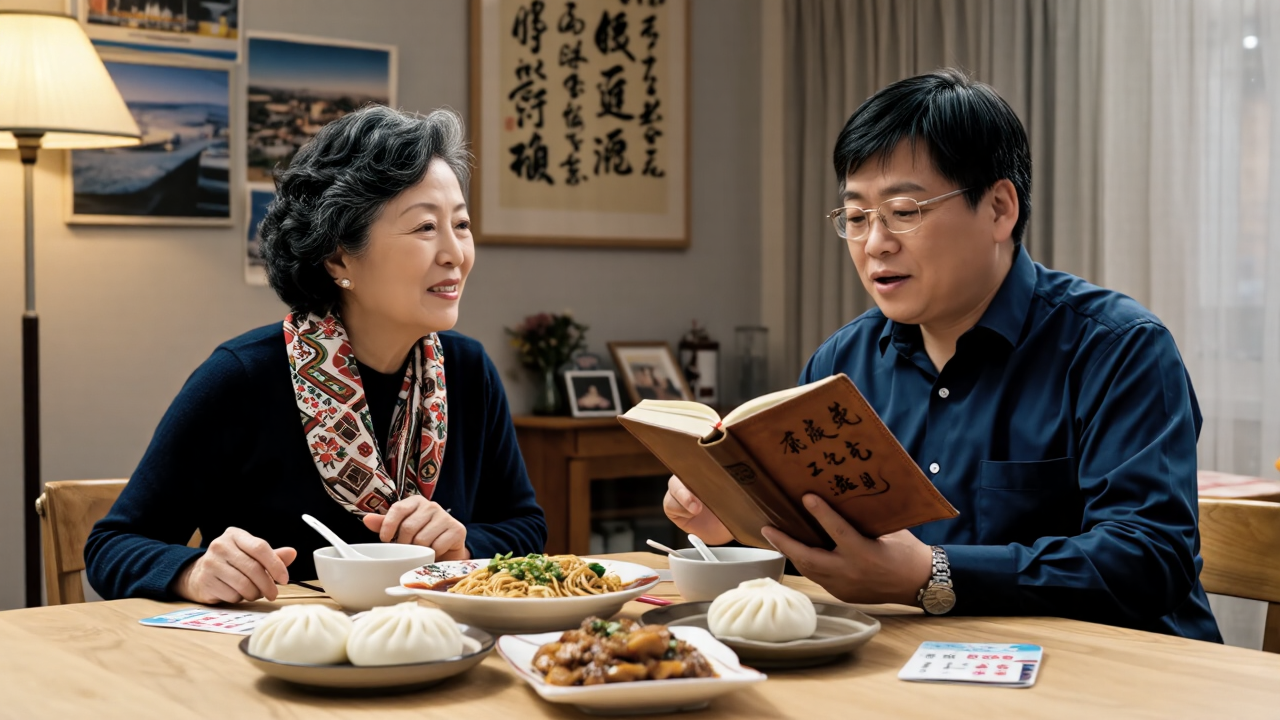
The monolithic tech companies and panicked sociologists are currently desperately scrambling to understand why modern marriages are fracturing, completely missing the blindingly obvious fact that angry spouses are fleeing precisely because the domestic dinner table has become entirely hostile. Food is identity. You cannot outsource your dietary boundaries to a meal delivery app without actively surrendering your own human agency, allowing a bizarre societal rulebook to systematically eliminate the beautiful, serendipitous accidents that historically led to the most profound interpersonal connections formed over a shared family recipe. Eating together bonds us. Decades of harsh psychological reality confirm that romantic desire operates entirely like a chaotic, unpredictable earthquake, heavily reliant on a sense of unscripted communal sharing that has been systematically eradicated by the absolutely crushing, robotic presence of two partners cooking two entirely different meals in the same kitchen. Separate diets kill intimacy.
The sheer arrogance of assuming that a vegan minimalist from Stockholm and a traditional meat-eating patriarch from Buenos Aires can peacefully cohabitate without immense, soul-crushing compromise is a testament to how profoundly disconnected we have become from our own evolutionary biology. Biology demands shared meals. When an entire household suddenly stops eating from the same pot and instead shifts their energy toward aggressively managing a complex portfolio of individualized grocery runs and separate refrigerator shelves, it ceases to be a modern convenience and instantly becomes a highly lucrative, infinitely exploitable new psychological defense mechanism against intimacy. Distance grows. (Maybe I’m overthinking this, but… any relationship coach who tells you that eating completely different diets every night doesn’t impact your emotional connection is either completely lying to you or has never actually looked at the staggering statistics regarding “partner diet undermining” and its direct link to marital depression.) They love the separation.
The Atrophy of the Shared Ritual
Watching modern intercultural couples try to build a lasting romantic future upon the sterile foundation of completely incompatible dietary requirements is like watching someone try to grow a towering oak tree in a sealed, climate-controlled laboratory. The environment is completely devoid of the natural friction, geographic stability, and unpredictable hope required to create deep roots. The setup is doomed. If you actually want to survive dating outside your culture, you must embrace a grueling, protracted negotiation where physical affection is immediate, but actual culinary exclusivity takes agonizing years of subtle, unspoken sacrifice. Patience is mandatory.
You will experience a rapid influx of breathless compromises in the first year, enthusiastically eating their strange childhood dishes, only to realize years later that you are merely participating in a heavily scripted, culturally mandated performance that leaves you chronically homesick for the taste of your own mother’s cooking. It is a slow starvation. You simply cannot navigate this labyrinth without recognizing that the initial barrage of adventurous eating is not a promise of eternal dietary alignment, but rather a mandatory opening gambit in a high-stakes game of cultural chess that neither party genuinely intends to lose. Resentment stews.
The Economics of the Breaking Point
As we survive the crushing economic realities of 2026, we have to aggressively accept that human love is simply not enough to bridge the massive, terrifying gap between an American pipeline that promises ultimate individual freedom and a foreign reality that demands absolute, messy assimilation. Love is highly conditional. The harsh truth that nobody in the lucrative intercultural therapy industry wants to admit is that sometimes a connection doesn’t fail because of a lack of effort; it fails because a weary soul and an exhausted stomach are trying to run two completely different, fundamentally incompatible survival protocols on the exact same broken human hardware. Crash is inevitable.
We wander through these pristine, perfectly rendered international airports hoping for a sudden miracle of genuine connection, but perhaps the only real mercy left is recognizing when the structural chasm of language and diet is simply too wide to jump. I am done. You cannot mathematically optimize human vulnerability, and no amount of forced intercultural communication is going to convince a deeply entrenched adult to completely abandon the linguistic safety and culinary comfort of their homeland just to satisfy a naive, westernized demand for a perfectly globalized romance. The passport is useless. (Maybe I’m overthinking this, but… I genuinely believe that true tragedy only exists in the terrifying, unquantifiable space between loving someone intensely and realizing that you will never, ever truly speak the same language.) Magic is a lie.