The Sterile Optimization of Human Intimacy
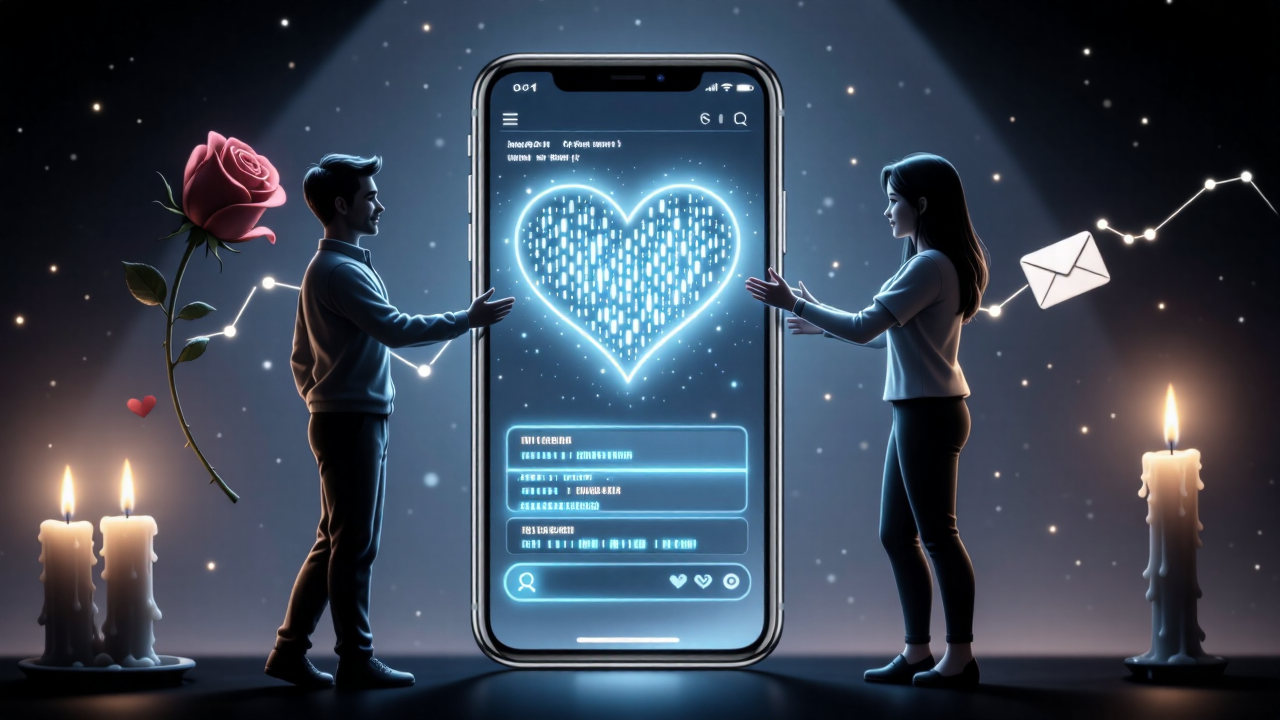
Looking out at the unrelenting, humid drizzle over Shengang Township right now, my screen casting a harsh blue glare over a cup of oolong tea that went entirely cold three hours ago, I realize that the Silicon Valley obsession with optimizing love has successfully engineered all the actual romance out of our lives. It is dead. We arrogantly pretend that feeding massive datasets of human behavior into a neural network will somehow crack the code of a successful marriage, but the brutal reality is that an algorithm-predicted perfect match completely destroys the necessary, terrifying chaos that makes falling in love worthwhile. They ruined fate.
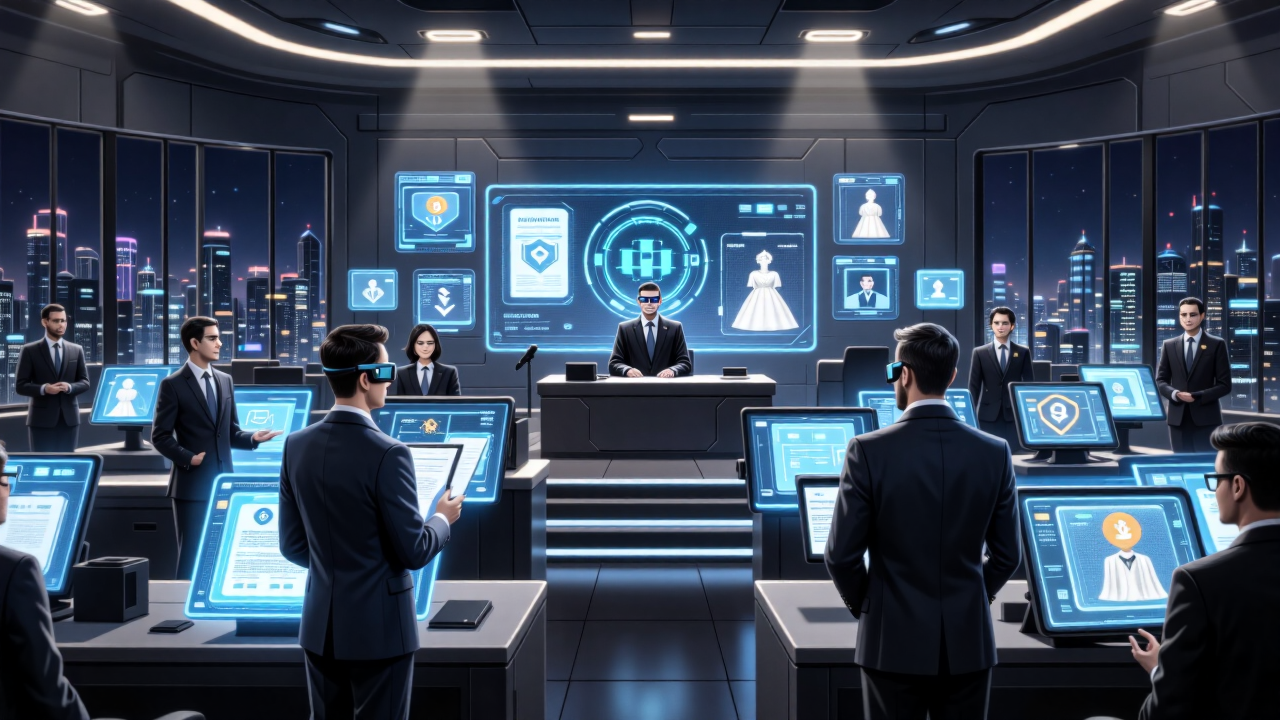
Right now, on the ground, the dating industry of 2026 has violently pivoted from passive swiping to aggressive AI matchmaking, where chatbots not only predict compatibility but actively orchestrate the dates and negotiate preferences on our behalf. The machine is taking over. (Maybe I’m overthinking this, but I am utterly convinced that handing over the most vulnerable, intimate decisions of our human existence to a piece of proprietary software is the fastest route to collective emotional bankruptcy.) It is terrifying. If you want to understand the profound ethical rot at the center of modern digital courtship, you have to look past the slick marketing and realize that these predictive models are not helping us find our soulmates; they are simply commodifying our loneliness into a highly predictable, sterile supply chain. Chaos is required.
The Flawed Architecture of Algorithmic Compatibility
The foundational premise of every single AI dating platform—from Match Group’s latest AI concierges to premium startups like Known and Amata charging $50 a pop for curated blind setups—is built on an absolutely massive, scientifically illiterate lie. Data means nothing. They sell the illusion that your psychological profile, your Spotify listening habits, and your specific preference for tall brunettes can be mathematically synthesized to guarantee long-term relationship survival, completely ignoring decades of rigorous psychological research proving that individual traits predict almost zero variance in romantic success. Compatibility is a myth.
When you actually examine the academic literature surrounding speed dating and long-term attachment, it becomes violently clear that two people who look perfect on a spreadsheet will often sit across from each other at a dimly lit bar and feel absolutely nothing but a hollow, agonizing boredom. The spark defies logic. Decades of relationship science confirm that romantic desire operates entirely like a chaotic, unpredictable earthquake, heavily reliant on the messy, real-time dynamic that forms between two physical bodies rather than the alignment of their static data points. The chemistry is unquantifiable. (Honestly, I laugh at these tech executives who raise millions in venture capital claiming they have “solved” human attraction, when they clearly have never experienced the deeply irrational, gravity-defying pull of falling for someone who completely contradicts their stated preferences.) They are fools.
The “Stop Their Circuit” Rebellion
We have reached a terrifying inflection point in 2026 where the algorithm is no longer just suggesting partners, but actively colonizing our romantic desires by dictating exactly who we are allowed to see and who remains forever hidden in the digital shadows. We are trapped. This suffocating level of control has birthed the rapidly growing “Stop Their Circuit” movement across global markets, where furious users are finally protesting the manipulative algorithmic interference and opaque data practices that prioritize prolonged app engagement over actual, lasting connections. Trust is entirely broken.
When an AI system automatically filters out potential matches because they fall outside a rigid, predefined metric of height, income, or ethnic background, it ceases to be a helpful wingman and becomes an aggressively biased gatekeeper that enforces outdated societal prejudices. It is social engineering. You cannot outsource your boundaries to a black-box algorithm without actively surrendering your own moral agency, allowing a machine to systematically eliminate the beautiful, serendipitous accidents that historically led to the most profound human partnerships. The accidents matter.
The Commodification of Vulnerability
When the S&P 500 plummeted and closed at a brutal 6,632.19 on Friday, March 13, 2026, amidst widespread economic anxiety and inflation panic, the dating industry didn’t retreat; it simply evolved its extraction methods, pushing financially exhausted singles toward expensive, AI-brokered interactions that promise a guaranteed return on investment. Love is now a transaction. Stop being broke and stuck paying ridiculous monthly subscription fees for endless, agonizing swiping, the tech companies whisper, as they pivot toward a model where you literally pay a digital concierge $16 in tokens to negotiate the venue, time, and icebreakers for your date. They sell convenience.
This extreme, hyper-optimized convenience completely strips away the essential friction and agonizing vulnerability of putting yourself out there, effectively shielding users from the possibility of rejection while simultaneously guaranteeing that the resulting date feels exactly like a sanitized corporate job interview. Friction is essential. (Maybe I’m overthinking this, but if you cannot handle the mild psychological discomfort of asking a stranger out for coffee without relying on a large language model to script your opening line, you are fundamentally unequipped to survive a long-term human relationship.) Cowardice is highly profitable.
The Placebo Effect of Engineered Fate
The most insidious ethical dilemma surrounding these predictive models is the terrifying psychological phenomenon where people will actually force themselves to like a terrible match simply because a multi-billion-dollar application mathematically assured them that they were highly compatible. The machine lies. Decades ago, OkCupid ran a deeply controversial experiment proving that users were significantly more likely to engage with and pursue individuals if the platform artificially inflated their compatibility score, demonstrating that our belief in the algorithm is often far more powerful than the actual algorithm itself. We are easily manipulated.
This creates a deeply unsettling self-fulfilling prophecy where the romance is entirely manufactured by external validation, leaving couples to wonder years later if they actually fell in love with each other or if they just obediently followed the instructions of a server farm. The doubt lingers. You are completely outsourcing your intuition to a system that views you as nothing more than an exploitable data point, trading the terrifying, magnificent responsibility of choosing a partner for the comforting, utterly hollow safety of a software-approved pairing. The soul atrophies.
The Death of the Meet-Cute
We desperately treat the physical world as a disposable waiting room for our digital matches, completely ignoring the tangible, beautiful chaos happening right in front of us in our frantic search for a perfectly curated, frictionless romantic existence. Look up. The sheer arrogance of assuming that an AI can artificially engineer the serendipity of locking eyes with a stranger on a crowded train or laughing over a spilled coffee is a testament to how profoundly disconnected we have become from our own humanity. Algorithms cannot replicate magic.
The Urgent Need to Reclaim Romantic Chaos
Watching couples try to build a life upon the sterile foundation of an AI-generated match is like watching someone try to grow a towering oak tree in a sealed, climate-controlled laboratory—the environment is completely devoid of the natural friction, storms, and unpredictable elements required to create deep, resilient roots. The setup is doomed. You cannot mathematically optimize human vulnerability, and no amount of algorithmic tweaking is going to change the undeniable fact that true intimacy requires a massive, uncalculated leap into the terrifying unknown. Safety destroys passion.
(I am so incredibly exhausted by a generation that demands a money-back guarantee on human emotion, refusing to understand that the possibility of devastating heartbreak is the exact entry fee required to experience genuine, world-altering love.) We want it too easy. The harsh reality that nobody in the lucrative matchmaking industry wants to admit is that a “perfect match” on paper is absolutely meaningless if it was arrived at through the cold, calculated logic of a machine rather than the messy, inexplicable collision of two human lives. We are done playing.
The next great rebellion of our era won’t be fought over politics or economics, but over the fundamental right to experience the glorious, inefficient, and terrifying reality of a love story that no computer could ever predict. Delete the app.