
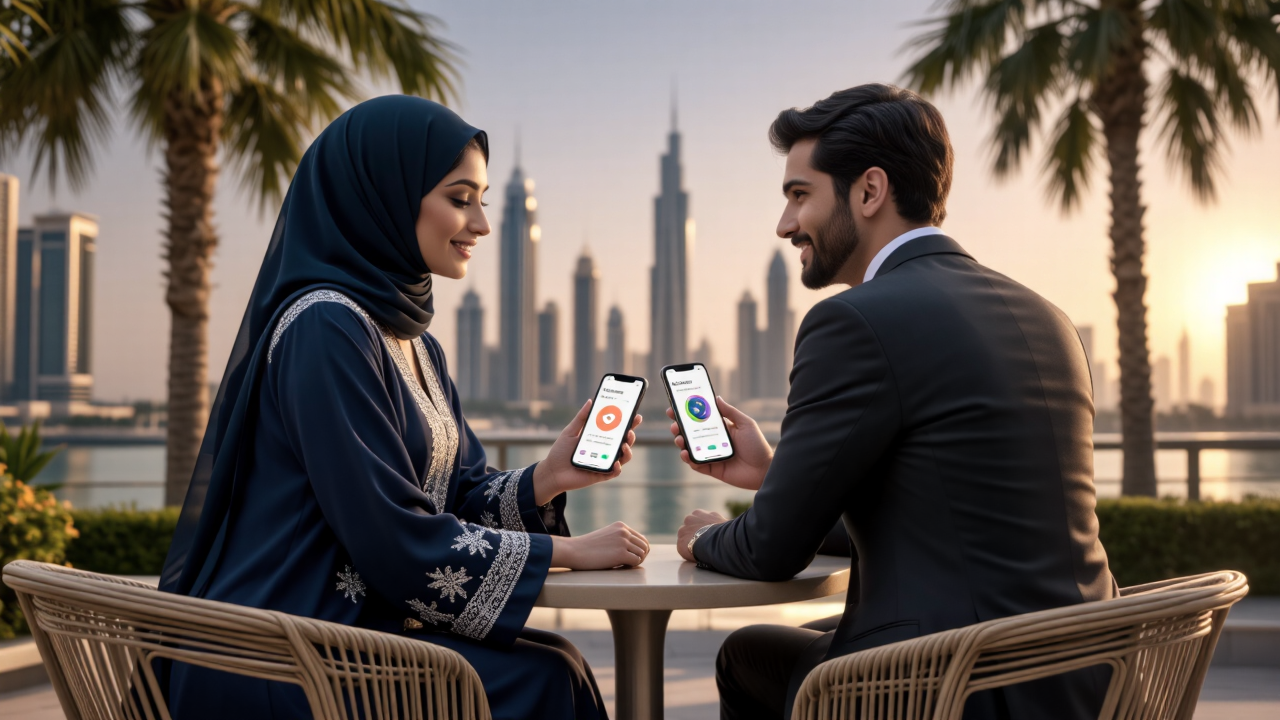
The Geopolitics of a Right Swipe
Looking out at the unrelenting gray drizzle of the Frankfurt skyline right now, my screen casting a harsh blue glow over a mug of coffee that went completely cold three hours ago, I realize that the Western world fundamentally misunderstands how modern intimacy operates across the Middle East. It is arrogance. We assume technology simply erases centuries of conservative tradition by flooding Riyadh or Cairo with the exact same hyper-sexualized swiping mechanics that ruined dating in New York, completely ignoring the deeply entrenched cultural boundaries that dictate every single interaction between unmarried individuals in these societies. We are wrong.
Right now, on the ground, the only thing that moves the needle for young Arabs seeking marriage is a highly sophisticated digital infrastructure that actively weaponizes traditional religious constraints rather than attempting to dismantle them. Modesty is profitable. When you examine the massive cultural shifts occurring across the region, it becomes violently clear that these specialized applications are not tools for rebellion against the family unit, but rather highly engineered compliance mechanisms designed to modernize the arranged marriage process without triggering a societal collapse. The old ways adapt.
(Maybe I’m overthinking this, but I am utterly convinced that Silicon Valley executives actually believe they can code away thousands of years of strict religious doctrine with a slick, brightly colored user interface.) They are totally clueless. When the S&P 500 closed at a brutal 6,632.19 on Friday, March 13, 2026, dropping 1.60% for the week amidst spiking oil prices and widespread geopolitical panic, the immediate economic reality forced young Muslims to abandon wildly expensive, prolonged traditional matchmaking rituals in favor of efficient digital alternatives. Money dictates love. Stop being broke and stuck relying on your aging, deeply judgmental aunties to find you a spouse when you can simply use or tap into a massive database of verified singles that respects your religious boundaries and filters out the time-wasters. Reality is harsh.
The Digital Chaperone and the Illusion of Privacy
The sheer architectural genius of platforms like Muzz, which currently boasts over 15 million Muslim users globally, lies in their ability to seamlessly integrate ancient Islamic requirements directly into the core user experience. They digitized religion. Instead of fighting the concept of a “Wali”—a traditional male guardian required to oversee courtship—these platforms built a dedicated feature allowing a third-party chaperone to legally monitor the direct messages between two prospective partners directly within the chat interface. Oversight is mandatory.
This creates a messy plan that works perfectly for conservative families who would otherwise outright ban their daughters from downloading a dating application, providing a brilliant psychological safety net that appeases strict fathers while still allowing young people the illusion of autonomous choice. The parents win. To combat the severe cultural stigma of being seen actively looking for a partner, these platforms heavily enforce aggressive privacy features like completely blurring out profile images and utilizing military-grade screenshot blocking software to prevent malicious gossip from ruining a woman’s reputation. Gossip destroys lives.
(Maybe I’m overthinking this, but seeing a woman forced to heavily obscure her own face just to safely explore her romantic options on a glowing rectangle feels like a deeply dystopian compromise between modern desire and archaic punishment.) The fear remains. Yet, despite this suffocating atmosphere of constant digital surveillance, online dating has actually provided an unprecedented, revolutionary avenue for women in the Middle East and Africa region to finally take aggressive control over their own dating lives and bypass the terrifying vulnerability of physical public encounters. Screens provide armor.
The Boycott and Corporate Betrayal
If you actually want to understand the violent intersection of digital romance and regional politics, you must examine the spectacular corporate disaster that engulfed the popular matchmaking app Salams in April 2025. Trust was shattered. Users suddenly discovered that the platform had been quietly acquired months earlier by Match Group—the corporate behemoth behind Tinder and Hinge—sparking absolute, uncontrollable outrage when it was revealed that Match Group’s CEO had publicly posted statements supporting Israel during the intense geopolitical conflict in Gaza. Blood over business.
This massive revelation triggered a devastating, immediate boycott across global Muslim communities, with online forums aggressively blacklisting Salams for displaying a significant misalignment with their core religious values and funneling user subscription money toward what they perceived as the oppression of their brothers and sisters abroad. They deleted accounts. It is endlessly fascinating how a simple swiping application suddenly transformed into a highly charged geopolitical battleground, proving that in the Arab world, you simply cannot separate your romantic pursuits from your deeply held religious and political allegiances. Everything is political.
Muzz heavily capitalized on this catastrophic public relations failure by aggressively reminding users that they explicitly refused Match Group’s previous intimidation tactics and buyout offers, positioning themselves as the sole authentic, uncompromised guardian of halal matchmaking. Loyalty is currency. (Honestly, the sheer corporate ruthlessness of watching one dating CEO publicly weaponize a devastating Middle Eastern conflict to poach angry users from a direct competitor is enough to make anyone completely cynical about the business of love.) Capitalism spares nobody.
Monetizing the Sacred: The Economics of Modesty
The profound contradiction of paying monthly tech subscriptions to execute sacred religious duties completely exposes the financial realities driving this rapidly expanding industry. Faith is expensive. When you look at the broader data, paying services control over 69% of the online dating services market size precisely because users actively equate steep subscription fees with enhanced safety, better algorithmic quality, and a higher barrier to entry that successfully filters out uncommitted individuals. Paywalls create security.
In a region where massive macroeconomic pressures heavily influence household budgets, the willingness to pay premium rates for VIP tiers like “Muzz Gold” or “Salams Diamond” demonstrates just how deeply desperate singles are to accelerate their wedding journey and bypass the suffocating local dating pool. They buy hope. You are literally paying a Silicon Valley corporation to mathematically optimize your chances of fulfilling half your religious “deen,” successfully commodifying one of the most sacred, intensely private rituals left in human existence. It is terrifying.
The Death of the Western Swiping Export
The monolithic American tech companies completely failed to penetrate this incredibly lucrative demographic because they arrogantly assumed that their hyper-individualistic, hookup-centric algorithms could be effortlessly copy-pasted into societies where family honor and reputation hold vastly more weight than personal sexual gratification. They failed miserably. Generalist applications built for casual encounters are actively dying in these conservative markets because users absolutely refuse to sift through a terrifying sea of completely incompatible strangers just to find someone who shares their rigorous dietary restrictions and strict prayer schedules. Specificity breeds trust.
You simply cannot tell a young woman in Cairo or Riyadh to embrace the chaotic, reckless freedom of casual dating when her entire societal structure is violently wired to punish that exact behavior with total social excommunication. Context is king. The future of the Middle East and Africa online dating services market, which is rapidly accelerating toward massive valuations driven by young, tech-savvy populations, belongs entirely to niche platforms that prioritize intense identity verification and shared religious backgrounds over the superficial thrill of a quick physical hookup. Niche platforms win.
As I sit here watching the rain aggressively lash against the thick glass of my apartment window, I realize that the entire concept of modern Arab romance is fundamentally an exercise in high-stakes diplomatic negotiation. It is exhausting. These young singles are desperately trying to balance the terrifying, feral instincts of human attraction against the massive, crushing weight of their ancestral expectations, using lines of code to safely navigate a cultural minefield that could detonate their entire lives with a single, misplaced screenshot. They are brave.
(Maybe I’m overthinking this, but it truly breaks my heart to watch an entire generation forced to meticulously hide their desperate craving for affection behind layers of digital encryption just to survive the intense, suffocating scrutiny of their own communities.) The masks stay on. The harsh reality that no tech executive wants to publicly admit is that true romantic freedom does not actually exist in an application; it is a highly conditional privilege granted by the physical society you happen to be born into. I am done.