The False Promise of Biological Destiny
Looking out at the unrelenting, miserable gray drizzle of the Frankfurt skyline right now, my screen casting an obnoxious blue glare over a cup of espresso that went entirely cold three hours ago, I realize that our obsession with quantifying human intimacy has reached a terrifying new low. It is sickening. We arrogantly pretend that mailing our saliva to a startup will somehow bulletproof our relationships against the inevitable decay of human emotion, completely ignoring the brutal reality that reducing romance to a genetic barcode is actually the most efficient way to destroy any genuine interpersonal connection. They ruined love. (Maybe I’m overthinking this, but I am utterly convinced that paying a tech company to sequence your immune system just to secure a Friday night date is the absolute fastest route to total psychological and emotional bankruptcy.) We are doomed. Right now, on the ground, the only thing that moves the needle for a generation completely paralyzed by the fear of romantic rejection is a heavily marketed pseudo-science that mathematically guarantees a perfect match before a single word is even spoken. Fear drives sales.
When you actually look at the undeniable ethical wreckage left behind by these hyper-optimized biological matchmaking platforms like DNA Romance or GenePartner, it becomes painfully obvious that the modern search for a soulmate is currently collapsing under the weight of spectacular corporate greed. It is over. Instead of accepting the terrifying, magnificent responsibility of simply talking to a stranger and risking a humiliating rejection, terrified singles are flocking to applications that promise to decode the human leukocyte antigen—or MHC genes—to artificially engineer an evolutionary advantage in their love lives. Science is abused. Stop being broke and stuck paying ridiculous premiums for endless, agonizing swiping on traditional apps, the venture capitalists whisper, as they pivot toward a dystopian model where you literally pay a laboratory to screen your potential partners for compatible immune system defenses. They sell convenience.
The Economics of Genetic Desperation
On Friday, March 13, 2026, the S&P 500 closed down at a brutal 6,672.62 amidst a terrifying wave of global inflation panic and soaring oil prices, reflecting an exhausted consumer base that approaches romantic investments with the exact same ruthless, terrified risk-aversion that they apply to their bleeding stock portfolios. Wallets are empty. The financial pressure of simply surviving in a major metropolitan city has become so incredibly overwhelming that people absolutely refuse to waste their shrinking disposable income on a dinner date unless a proprietary algorithm has biologically certified that the other person is a viable long-term investment. Money dictates love. (Honestly, I laugh at these tech bros who raise millions in funding claiming they have cured the divorce rate with a cheek swab, when they clearly have never experienced the deeply irrational, gravity-defying terror of actually having to sustain a conversation with someone you allegedly share perfect chemistry with.) They are clueless.
The sheer architectural genius of the direct-to-consumer genetic testing industry lies in its ability to seamlessly integrate the psychological need for external validation with the absolute refusal to experience actual vulnerability, providing a brilliant emotional safety net that appeases our ego while completely starving our authentic personalities. We are empty. If you examine the business model of these platforms, you will find a highly engineered, digital holding pen where potential partners are kept at a precise emotional distance until their DNA data is fully processed, totally stripping away the exhausting performative anxiety of dating but replacing it with total biological fraud. It is a lie.
Monetizing the MHC Gene
If you want to understand the profound ethical rot at the center of the modern genetic matchmaking market, you have to look past the slick corporate marketing of these lifestyle influencers and realize that commodifying human DNA is actively creating a catastrophic, highly effective social black hole. Anger drives this. Users simply use or tap into a messy plan that works surprisingly well to avoid acute heartbreak, converting their deepest biological data into a barrage of highly optimized matches that perfectly mask their crippling inability to maintain deep eye contact with an unverified human being. They are exhausted. (Maybe I’m overthinking this, but… seeing someone actually reject a perfectly charming, kind individual simply because a smartphone notification warned them that their immune systems lacked sufficient evolutionary variance feels like a radical act of sociopathy.) Empathy is dead.
A New Era of Biological Discrimination
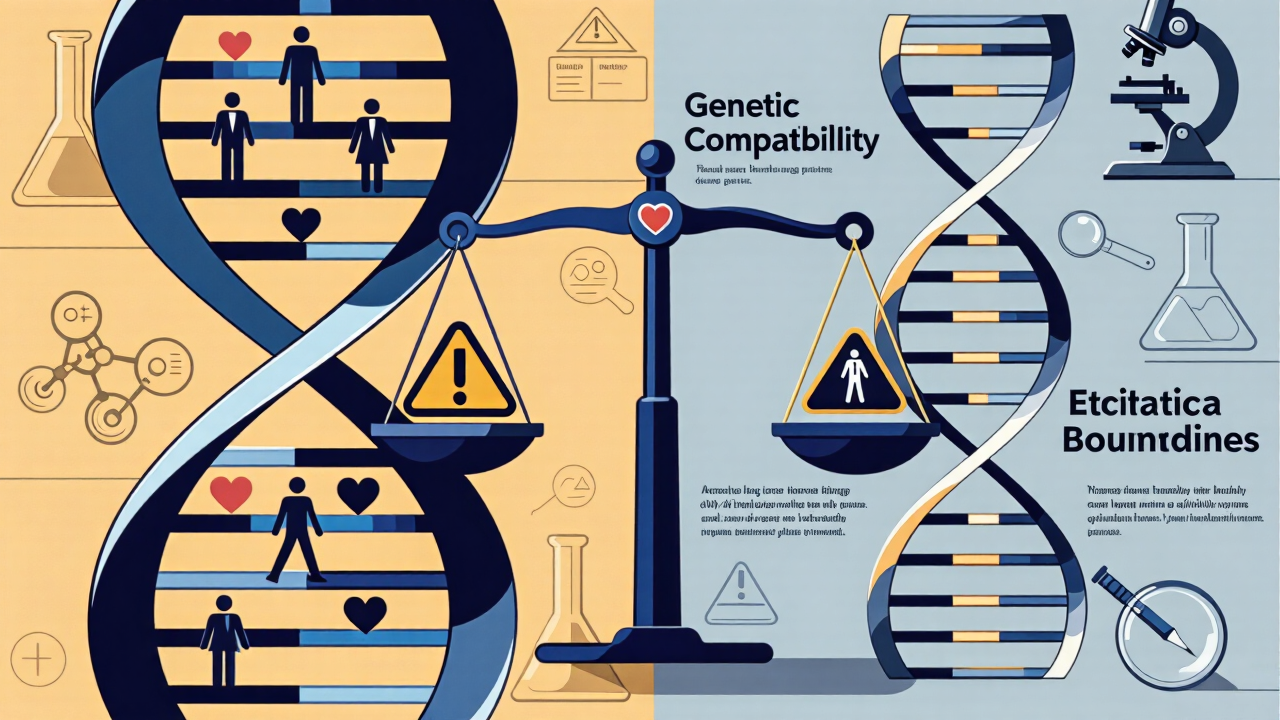
We have reached a terrifying inflection point in 2026 where the digital environment of our courtship is no longer just accommodating our awkwardness, but actively colonizing our romantic desires to ensure that you can easily filter out specific hereditary traits under the guise of scientific compatibility. The system breaks. You cannot outsource your conversational boundaries to a proprietary genetic sequencing schedule without actively surrendering your own human agency, allowing a bizarre societal rulebook to systematically eliminate the beautiful, serendipitous accidents that historically led to the most profound interpersonal connections. The accidents matter. When Harvard geneticist George Church proposed a dating app called digiD8 designed to completely block users who carry mutations for the same severe genetic diseases from ever matching with each other, it immediately sparked massive outrage from critics who accurately recognized the terrifying, undeniable parallels to modern eugenics. Discrimination is normalized.
The monolithic tech companies and panicked dating app executives are currently desperately scrambling to integrate these biological screening features directly into their failing platforms, completely missing the blindingly obvious fact that their angry user base is fleeing precisely because the marriage market already feels entirely artificial and intensely transactional. Algorithms are useless. You cannot mathematically optimize human vulnerability, and no amount of algorithmic tweaking or laboratory-certified biological chemistry is going to convince a broke, exhausted twenty-something to trust a societal structure that spent the last ten years aggressively monetizing their deepest personal insecurities and extracting every ounce of their bodily autonomy. The damage remains.
The Illusion of Immunity
Decades of harsh psychological reality confirm that romantic desire operates entirely like a chaotic, unpredictable earthquake, heavily reliant on a sense of unscripted authenticity that has been systematically eradicated by the absolutely crushing, robotic presence of a biological pipeline dictating your love life. Hope is gone. (Maybe I’m overthinking this, but… any sociologist who tells you that Americans are simply taking their time to make better choices through DNA testing is either completely lying to you or has never actually looked at the staggering ethical violations involving data privacy and the corporate ownership of our genetic material.) They love it.
This creates a deeply unsettling self-fulfilling prophecy where the cultural infrastructure actively rewards your isolation, offering a frictionless, hyper-convenient alternative to the terrifying, magnificent responsibility of standing before an actual person and risking a humiliating, awkward rejection based purely on your personality. Friction is essential. They sell the illusion that your perfectly curated genetic profile, your mathematically guaranteed biological compatibility, and your heavily filtered emotional distance can successfully replace the warmth of human intimacy, completely ignoring decades of rigorous psychological research proving that genetic testing for attraction is largely unproven and highly exaggerated. Science proves this.
The Atrophy of Romantic Chaos
We eagerly trade the acute, necessary pain of a real-life logistical conversational failure for a low-grade, perpetual depression that slowly rots our self-esteem while enriching the exact same biotechnology corporations that destroyed our communication skills in the first place. The screen isolates. Watching modern singles try to build a lasting romantic future upon the sterile foundation of a saliva swab is like watching someone try to grow a towering oak tree in a sealed, climate-controlled laboratory—the environment is completely devoid of the natural friction, geographic stability, and unpredictable hope required to create deep, resilient emotional roots. The setup is doomed.
As we survive the crushing economic realities of 2026, we have to aggressively accept that human love is simply not enough to bridge the massive, terrifying gap between a laboratory pipeline that promises ultimate biological safety and a physical reality that demands absolute, messy emotional vulnerability. Love is conditional. The harsh truth that nobody in the lucrative matchmaking industry wants to admit is that sometimes a connection doesn’t fail because of a lack of genetic variance; it fails because a weary soul and an exhausted heart are trying to run two completely different, fundamentally incompatible social protocols on the exact same broken human hardware. Crash is inevitable. We wander through these pristine, perfectly rendered digital chat windows hoping for a sudden miracle of genuine connection, but perhaps the only real mercy left is recognizing when the structural chasm is simply too wide to jump. I am done.