The Violent Whiplash from Tinder to the Altar
Right now, on the ground, a generation that grew up ghosting each other via text message is actively demanding the most rigid, ancient, and formalized romantic rituals available. We need to face the brutal reality that the digital dating experiment is an unmitigated psychological disaster, driving exhausted young people to sprint directly toward the heavy, suffocating comfort of traditional marriage ceremonies just to feel something real.
It is a complete structural rejection of the algorithm.
The seamless, frictionless swipe-culture of modern dating stripped human intimacy down to a sterile supply chain, and young people are violently rebelling against the absolute cheapness of it all. According to Zola’s 2026 First Look Report, 55 percent of Gen Z couples are completely bypassing the digital meat market, returning to traditional, analog “meet-cutes” in environments like schools or local communities rather than relying on dating apps.
(Maybe I am just chronically allergic to modern romance, but pretending that a double-tap on an Instagram story somehow equals genuine human courtship is an absolute, undeniable joke…)
They are desperate for a messy plan that works. The digital dating ecosystem heavily marketed itself as a utopian landscape of infinite choices where hyper-efficient algorithms would flawlessly pair you with your perfect soulmate based entirely on mutual consumer preferences and geographic proximity, but it actually just engineered a society of profoundly isolated neurotics who are completely terrified of making prolonged eye contact.
We were entirely scammed.
The Myth of the Casual Modernist
The cultural commentators completely misread the room. They assumed that because young people were delaying marriage and abandoning organized religion in record numbers, the wedding industry would eventually collapse into a series of casual, minimalist backyard barbecues.
They were so incredibly wrong.
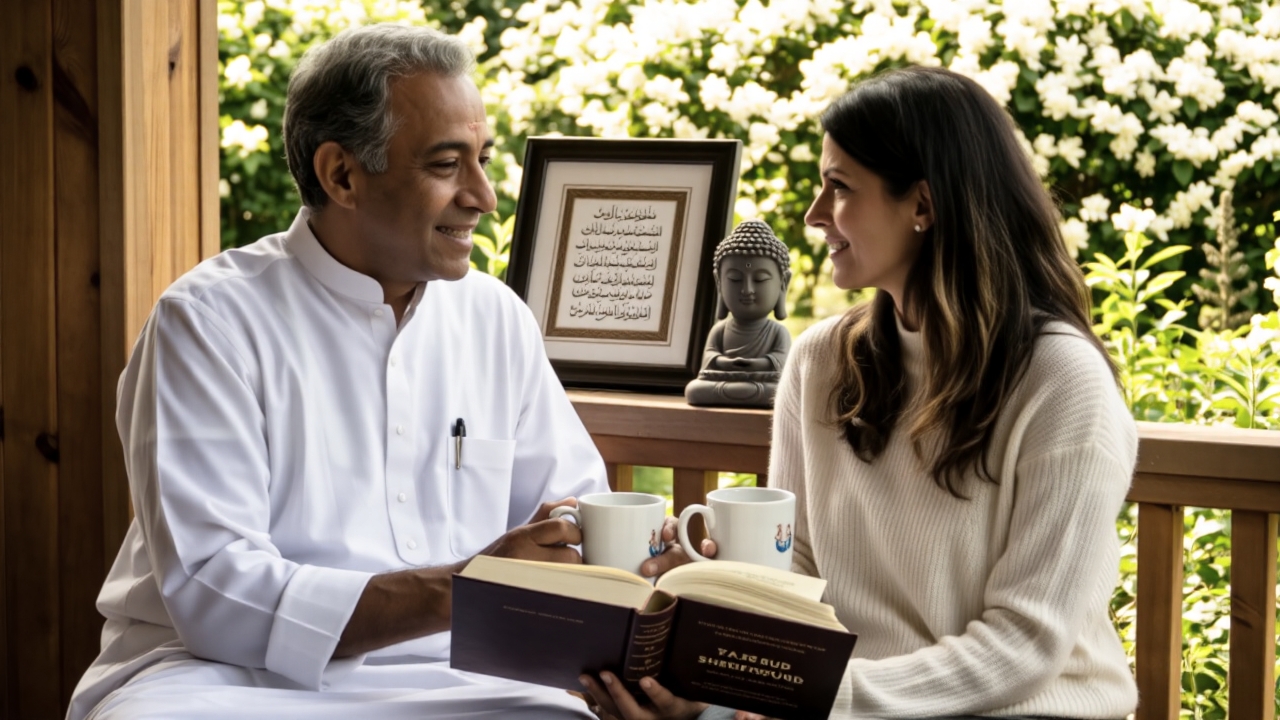
Young couples are not abandoning the sacred; they are actively resuscitating it because fast-food dating has left them spiritually malnourished. A massive, staggering 54 percent of Gen Z couples are now explicitly reclaiming religious customs and incorporating them directly into their wedding ceremonies. This represents a massive, undeniable statistical jump from the mere 38 percent of Millennials who chose to include religious elements in their big day.
I am sitting in a brutally minimalist cafe in Frankfurt right now, watching the freezing rain smear the neon lights across the wet pavement while the harsh glare of my laptop screen illuminates yet another depressing piece of demographic data. My espresso is entirely cold. The sheer arrogance required by tech executives to assume that a gamified mobile app could effortlessly replace thousands of years of deep-seated human instinct regarding sacred vows is genuinely staggering.
Couples are realizing that you cannot just casually merge two lives together using a shared Netflix password and a casual verbal agreement. They want the weight of the ritual.
Pricing Out the Artificial Aesthetic
If you want to understand the profound psychological shift happening in modern romance, you have to look directly at where the money is bleeding out. Millennials threw themselves into crippling debt trying to buy the perfect, curated luxury aesthetic, but the younger generation is actively restructuring their finances to buy a physical community instead.
You cannot fake a crowd.
The national average for a wedding in 2025 and 2026 has ballooned to an agonizing $36,000. Yet, when you segment the data by age, a fascinating and violent contradiction emerges. Gen Z couples are managing to spend significantly less—averaging a budget of $27,000 compared to the massive $51,130 typically spent by Millennials.
Despite slashing their overall budgets, these younger couples are actually hosting substantially larger weddings, pushing their average guest count to 131 people, which easily dwarfs the Millennial average of 113 guests.
(Honestly, trying to feed 131 people in this inflation cycle sounds like a literal nightmare… but they are clearly prioritizing the physical presence of a community over serving overpriced, mediocre filet mignon.)
The Radical Act of the Support Squad
They want to stop being broke and stuck in a performative cycle of Instagram aesthetics, focusing instead on assembling real, tangible support networks to witness their transition into adulthood. They are rejecting the highly individualized, minimalist bridal trend of the last decade.
An overwhelming 92 percent of Gen Z couples are actively choosing to have a massive bridal party, a sharp contrast to the 79 percent of Millennials who opted for the same.
When your entire romantic history consists of fleeting, undocumented “situationships” that evaporated into the digital ether the second someone stopped texting back, you inherently crave the physical validation of witnesses. You need a massive, physical crowd of people standing in a room, publicly acknowledging that this specific relationship is entirely real and legally binding.
The bridal party isn’t just a fun photo opportunity; it is an aggressive, defensive wall built to protect the couple from the extreme isolation of modern urban life.
It is the only thing that moves the needle.
The Heavy Burden of Public Vows
The modern marriage ceremony is no longer just a celebration; it is a profound psychological anchor dropped directly into a chaotic, disposable culture. We use/tap into these ancient, rigid formats because the sheer terrifying ambiguity of modern relationships has become completely unsustainable for the human nervous system.
You date casually for a decade, enduring a relentless parade of agonizingly short-lived digital encounters, only to realize that the absolute freedom to leave at any moment is actually a psychological prison.
Couples are actively demanding transparency and shared stakes long before they ever reach the altar. The era of the completely blind, shocking surprise proposal is essentially dead. Data shows that a massive 68 percent of modern couples now mutually and explicitly decide exactly when they want to get engaged, turning what used to be a dramatic surprise into a carefully negotiated, deeply intentional contract.
They are heavily mitigating their emotional risk.
(Is there anything less romantic than scheduling your own surprise proposal on a shared Google Calendar? Probably not, but I suppose it perfectly encapsulates the intense anxiety of a generation terrified of making a catastrophic mistake…)
The Desperate Hunger for Permanence
Of course, we still ruin it by demanding that these sacred rituals perform flawlessly for an online audience. A frustrating 54 percent of Gen Z couples openly admit they feel intense pressure to ensure their wedding is highly “social media-worthy,” actively shifting their funds to guarantee the floral arrangements look perfect on a TikTok feed.
We desperately crave the ancient, spiritual weight of the ceremony, but our brains are so utterly rotted by digital validation that we immediately compress that sacred moment into a fifteen-second video clip just to prove to strangers that we are capable of being loved.
This is the central, agonizing paradox of the 2026 wedding boom.
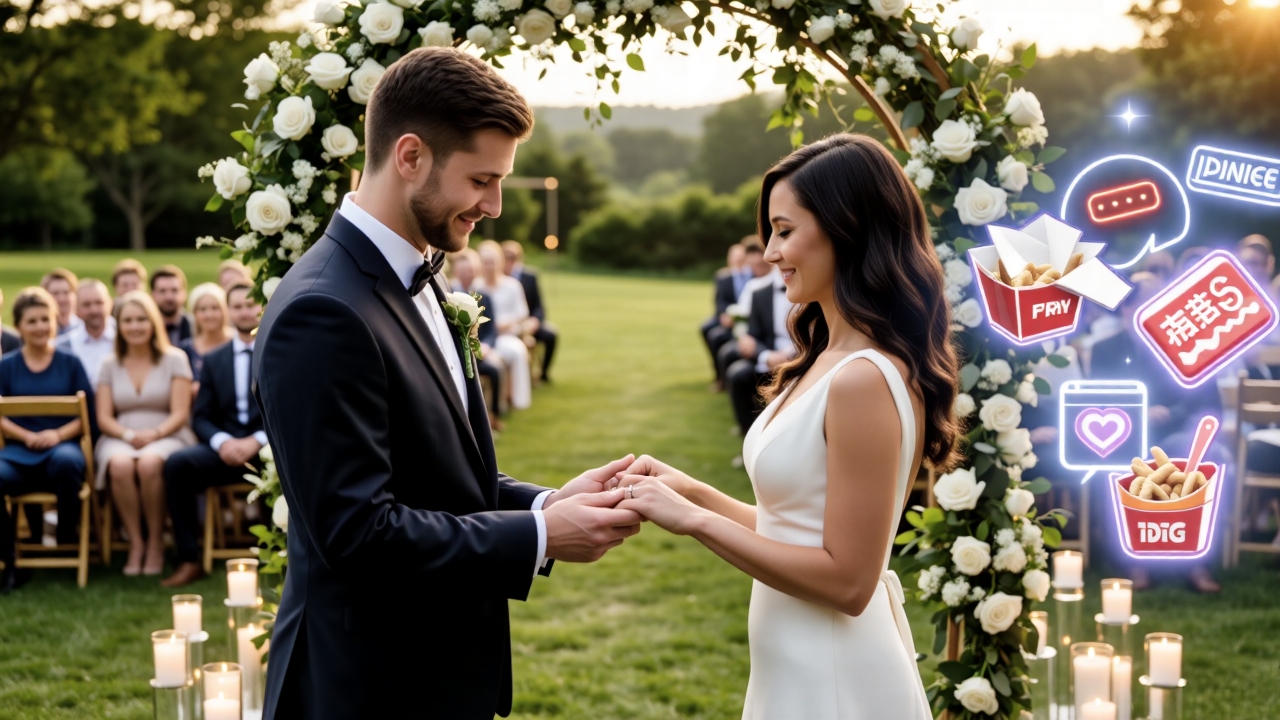
Young people are sprinting away from the shallow, disposable mechanics of fast-food dating, desperately throwing themselves onto the altars of tradition to seek refuge from a culture that treats human beings like cheap commodities. They wrap themselves in white chiffon and demand that their friends stand beside them, fiercely hoping that if they just repeat the ancient, heavy words correctly, the chaotic void of modern loneliness will finally stop aggressively pulling at the edges of their lives.
But deep down, as the sparklers burn out and the venue clears, they are entirely terrified that even a legally binding contract cannot permanently save them from the terrifying fragility of their own restless minds.