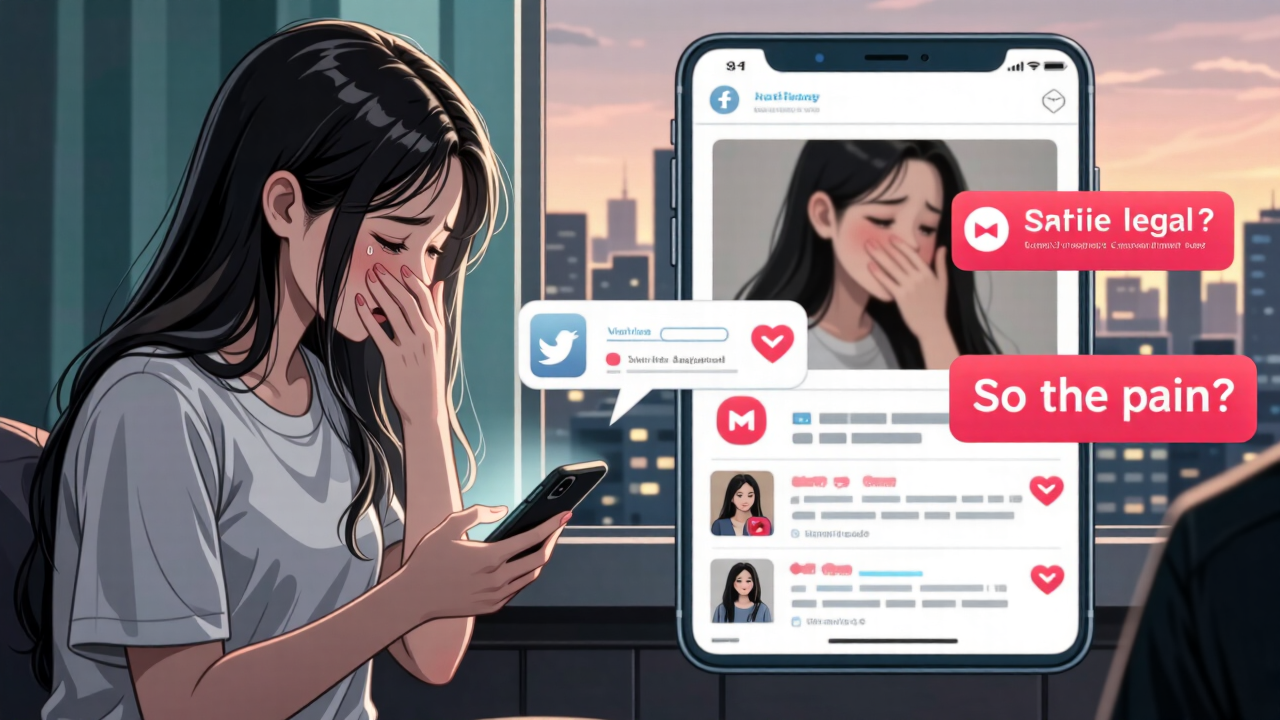

The Corporate Audit of Human Intimacy
Looking out at the unrelenting, miserable gray drizzle of the Frankfurt skyline right now, my screen casting an obnoxious blue glare over a cup of espresso that went entirely cold three hours ago, I realize that the modern concept of blind romantic trust is a spectacular, financially devastating liability. It is dead. We arrogantly pretend that falling in love is a magical, intuitive process protected by destiny, completely ignoring the brutal reality that committing to a stranger in 2026 requires the exact same ruthless, forensic due diligence as acquiring a hostile corporate entity. They killed romance. (Maybe I’m overthinking this, but it truly infuriates me how American pop culture constantly infantilizes marriage as a fairy tale, treating a legally binding financial contract like it’s just an extended sleepover with your best friend.) It is sickening. Right now, on the ground, the only thing that moves the needle for a generation completely terrified of online predators and hidden debt is hiring a licensed private investigator to ruthlessly audit their partner’s entire existence before signing a marriage certificate. Paranoia pays well.
When you actually look at the undeniable financial wreckage left behind by digital catfishing and romance fraud, it becomes painfully obvious that the traditional pathway to forming a household is currently collapsing under the weight of spectacular systemic deceit. Trust is bankrupt. On Friday, March 13, 2026, the S&P 500 closed down at a brutal 6,632.19 amidst a terrifying wave of global inflation panic, reflecting an exhausted consumer base that absolutely refuses to risk their shrinking net worth on a partner who might be hiding a catastrophic secret. Wallets are empty. Stop being broke and stuck paying ridiculous premiums for messy divorces and stolen assets when you can simply pay a detective agency a few thousand dollars to mathematically guarantee that your fiancé actually works at the tech company they claim to. Reality is harsh. (Honestly, I laugh at these naive dating coaches who raise millions selling online courses about “manifesting your soulmate,” when they clearly have never experienced the deeply irrational, gravity-defying terror of discovering your future husband is secretly bankrupt and fighting a custody battle.) They are clueless.
The Economics of the Digital Catfish
The sheer architectural genius of the modern dating app ecosystem lies in its ability to seamlessly integrate the psychological need for constant attention with the absolute refusal to enforce any real-world identity verification, providing a brilliant emotional safety net for scammers while completely starving actual users of basic physical safety. We are exposed. If you examine the global surge in international romance scams throughout 2025 and 2026, you will find a highly engineered, digital hunting ground where predators use sophisticated social engineering to drain bank accounts, totally stripping away the exhausting performative anxiety of dating but replacing it with total financial fraud. It is a scam. We have reached a terrifying inflection point where 72% of online daters explicitly state that privacy and safety fears deter them from using these platforms, proving that the digital environment of our courtship is actively colonizing our romantic desires to ensure maximum corporate profit while offering zero consumer protection. The system breaks.
You cannot outsource your personal safety to a proprietary swiping algorithm without actively surrendering your own human agency, allowing a Silicon Valley database to systematically eliminate the beautiful, serendipitous accidents that historically led to the most profound interpersonal connections. The accidents matter. (Maybe I’m overthinking this, but… seeing someone actually hand over their life savings to a person they met on Tinder three weeks ago, completely bypassing the agonizing, anxiety-inducing mental effort that defines basic self-preservation, feels like a radical act of cognitive decline.) Empathy is weaponized. We desperately treat the virtual dating pool as a disposable playground for our ego, completely ignoring the tangible, beautiful chaos that used to occur over a shared community introduction in our frantic search for a perfectly curated, completely frictionless interaction. Look up.
Why Instagram Stalking is Financially Ruinous
If you want to understand the profound ethical rot at the center of the modern dating market, you have to look past the slick corporate marketing of social media platforms and realize that scrolling through a partner’s Instagram feed is actively creating a catastrophic, highly effective illusion of safety. Ignorance drives this. Users simply use or tap into a messy plan that works surprisingly well to placate their own anxiety, converting their late-night online creeping into a false sense of security that perfectly masks their partner’s crippling hidden credit card debt. They are exhausted. It infuriates me that relationship analysts are only now acting surprised that financially independent adults absolutely refuse to trust social media, opting instead to hoard third-party background check reports like a crutch that a traditional therapist cannot physically seize. Greed wins out.
A carefully curated LinkedIn profile displaying a senior management title does not guarantee actual employment, and a grid of luxury vacation photos does absolutely nothing to prove that the individual isn’t currently drowning in tax liens and dodging child support payments. Pictures lie constantly. The data clearly shows that 60% of Americans now actively support requiring mandatory background checks for new dating profiles, a terrifying statistic that perfectly encapsulates our collective realization that the digital avatars we fall in love with are entirely manufactured fictions. We demand truth.
The Privatization of Romantic Trust
The monolithic detective agencies and private intelligence firms are currently desperately scrambling to scale their operations, completely capitalizing on the blindingly obvious fact that angry citizens are fleeing traditional dating precisely because the marriage market already feels entirely artificial and intensely dangerous. Paranoia is profitable. You cannot mathematically optimize human vulnerability, and no amount of algorithmic tweaking is going to convince a broke, exhausted thirty-year-old to trust a societal structure that spent the last ten years aggressively monetizing their deepest personal insecurities while isolating them in anonymous, gated communities. The damage remains. Decades of harsh economic reality confirm that romantic desire operates entirely like a chaotic, unpredictable earthquake, heavily reliant on a sense of geographic and communal safety that has been systematically eradicated by modern urban sprawl. Community is dead.
The sheer arrogance of assuming that a couple can safely merge their lives without external verification is a testament to how profoundly disconnected we have become from our own evolutionary reality, because the absolute truth is that our ancestors always relied on village elders and extended families to ruthlessly vet potential suitors. We forgot everything. When an entire demographic suddenly stops relying on the word of a neighbor and instead shifts their spending toward aggressively overpriced, professional private investigators who report a three-to-four-fold surge in pre-matrimonial inquiries since the pandemic, it ceases to be a cultural quirk and instantly becomes a highly lucrative, infinitely exploitable new societal baseline. Privacy is gone. (Maybe I’m overthinking this, but… any sociologist who tells you that hiring a detective to trail your fiancée is a toxic breach of trust is either completely lying to you or has never actually looked at the staggering statistics regarding hidden assets in modern divorce proceedings.) They love the risk.
The Audit of the Soul
This creates a deeply unsettling self-fulfilling prophecy where the cultural infrastructure actively rewards your suspicion, offering a frictionless, hyper-convenient alternative to the terrifying, magnificent responsibility of standing before an actual person and risking a humiliating, awkward conversation about their financial past. Friction is essential. They sell the illusion that your perfectly curated background report, your mathematically guaranteed criminal record check, and your heavily filtered private surveillance can successfully replace the warmth of human intimacy, completely ignoring decades of rigorous psychological research proving that a relationship built entirely on forensic data is already fundamentally broken. Science proves this. We eagerly trade the acute, necessary pain of a real-life logistical confrontation for a low-grade, perpetual paranoia that slowly rots our self-esteem while enriching the exact same private security corporations that profit off our total social isolation. The screen isolates.
When a private investigator hands over a dossier revealing that a prospective groom is secretly unemployed, deeply indebted, and still legally married to someone in another state, the sheer brutal efficiency of the transaction completely shatters the romantic facade. The truth hurts. You simply cannot ignore the undeniable fact that these specialized agencies are doing the dirty, unglamorous work that our fragmented communities are no longer capable of performing, forcing us to acknowledge that in 2026, trust is no longer a feeling, but a highly specific, purchasable commodity. We buy peace.
The Dystopian Future of Matrimonial Mergers
Watching modern singles try to build a lasting romantic future upon the sterile foundation of a private investigator’s background report is like watching someone try to grow a towering oak tree in a sealed, climate-controlled laboratory—the environment is completely devoid of the natural friction, geographic stability, and unpredictable hope required to create deep, resilient emotional roots. The setup is doomed. (Maybe I’m overthinking this, but… seeing the same destructive investigatory tactics exploited across the globe makes me question if we actually possess free will when it comes to courtship, or if we are just blindly executing the late-stage capitalist risk-assessment scripts our lawyers hardwired into our brains.) We are ghosts. As we survive the crushing economic realities of 2026, we have to aggressively accept that human love is simply not enough to bridge the massive, terrifying gap between a society that demands ultimate financial safety and a physical reality that demands absolute, messy emotional vulnerability. Love is conditional.
The harsh truth that nobody in the lucrative matchmaking industry wants to admit is that sometimes a marriage doesn’t fail because of a lack of effort; it fails because a weary soul and an exhausted heart are trying to run two completely different, fundamentally incompatible trust protocols on the exact same broken human hardware. Crash is inevitable. We wander through these pristine, perfectly rendered digital chat windows hoping for a sudden miracle of genuine connection, but perhaps the only real mercy left is recognizing when the structural chasm of deceit is simply too wide to jump. I am done.