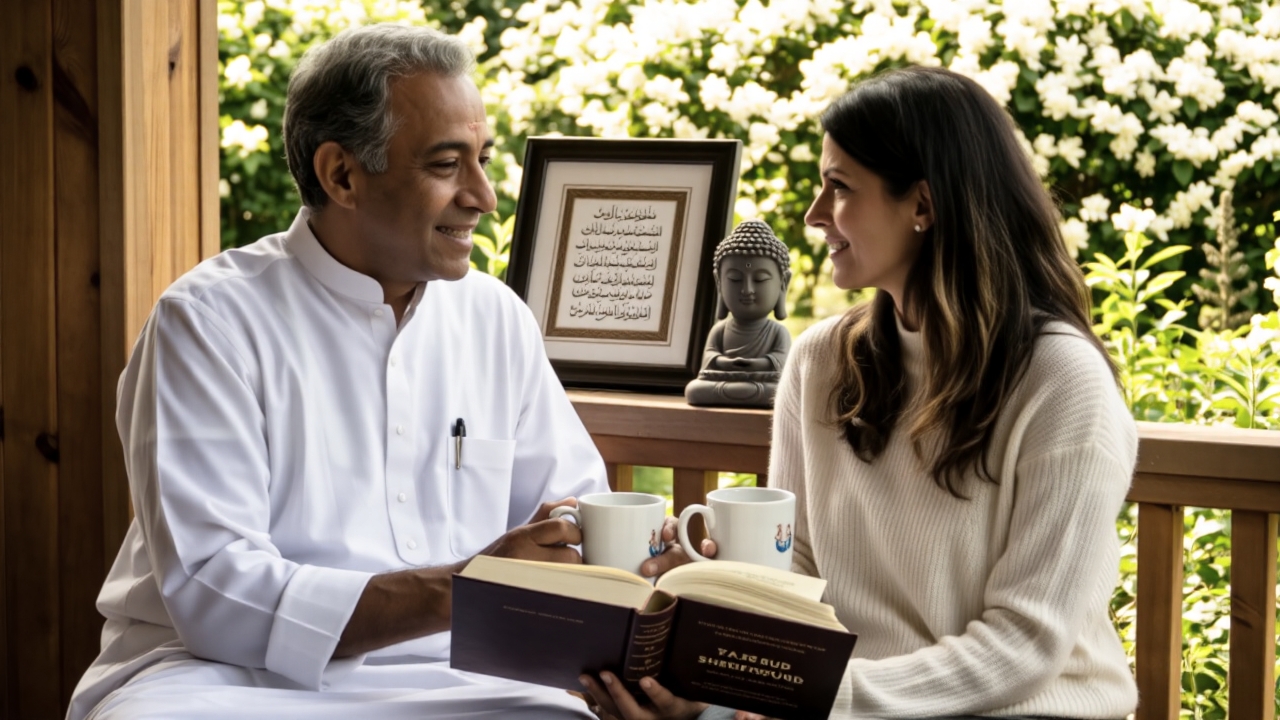


With the advancement of globalization, more and more people are entering diverse romantic relationships that cross religious, cultural, and national boundaries. In this context, interfaith relationships have become a real issue for many couples. Does the difference in faith really become a stumbling block to love? How should couples deal with these challenges in the face of differing religious beliefs?
- The Impact of Religious Differences: Challenges in Love Across Religions
The biggest challenge in interfaith relationships is the difference in religious beliefs. When two people come from different religious backgrounds, not only are there differences in lifestyle habits, holiday traditions, and dietary restrictions, but even deeper values, morals, and worldviews may differ significantly. For example, some religions have strict regulations on premarital sex, while others might have a more lenient attitude toward these behaviors. Facing these differences, misunderstandings and conflicts can arise, and in some cases, the relationship may break down due to an inability to find common ground on values.
- Communication and Understanding: The Core of Interfaith Relationships
However, religious differences are not insurmountable barriers. Successful interfaith relationships often depend on open communication and mutual understanding. First and foremost, establishing a healthy communication mechanism is crucial. Couples should have an open mind and be brave enough to discuss their respective beliefs, clearly understanding how their partner’s faith influences their lives. During this communication process, respect for each other is of paramount importance. Even if their beliefs differ, as long as both parties respect each other’s religion and customs, it creates room for maintaining the relationship.
- Compromise and Consensus: Finding Common Ground
In interfaith relationships, couples often need to reach compromises on key decisions. For instance, how to arrange holiday celebrations, or how to handle religious education for children. Couples can look for consensus on these issues and find a solution that is comfortable for both sides. If one partner’s religious practices are very important, the other person may need to adapt or at least show understanding. Both sides need to engage in continuous communication and adjustments to reach a solution.
Religious differences in interfaith relationships are often an unavoidable challenge. However, as long as there is mutual understanding, good communication, and a willingness to make compromises and adjustments, these differences can transform into opportunities to strengthen the relationship. Therefore, religious differences are not something that must break a relationship. Successful interfaith love stories often emerge from respect and tolerance, allowing both partners to grow together and create a unique love story.